
New paper outlines the development and future of the Coda Network
24 April 2026
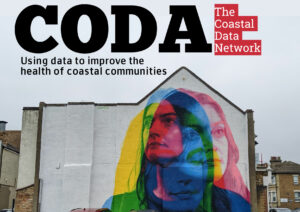 A new paper published in the International Journal of Population Data Science highlights how Eastern Arc’s Coda Network was established to address persistent health inequalities facing coastal populations.
The paper, “Using data to improve the health of coastal communities: the Coda Network”, responds directly to the UK Chief Medical Officer’s 2021 call for stronger learning networks and better population health data to support coastal areas, which consistently experience poorer health outcomes than inland communities.
Addressing long‑standing coastal health inequalities
Coastal areas across eastern and south‑eastern England face a unique combination of challenges including lower life expectancy, high levels of deprivation, poor transport links, seasonal employment, ageing populations, and limited health research infrastructure. Despite these pressures, access to detailed, actionable health data at local levels has often been limited.
Established in 2022 as part of Eastern Arc, the Coda Network was designed to tackle this gap by creating a trusted forum where practitioners, analysts, clinicians and academics could share expertise, data insights and best practice.
Since its launch, Coda has grown to more than 150 members from over 50 organisations, covering local authorities, NHS trusts, integrated care boards, universities, charities and community organisations across six counties and three unitary authorities.
From data sharing to real‑world impact
The article presents practical case studies showing how collaborative data use can inform public health action. These include mapping flood‑risk data against public health incidents to better understand the health impacts of climate‑related events, and delivering targeted data training for healthcare professionals working in coastal communities.
By fostering collaboration rather than duplicating existing data infrastructure, the network has enabled members to learn from each other, improve local decision‑making, and begin developing joint research projects and funding bids.
A model for other regions
The authors argue that Coda offers a replicable model for other coastal and under‑resourced regions seeking to strengthen their capacity for population data science. Central to its success has been an early commitment to openness, inclusivity and the sharing of best practice, alongside the flexibility of virtual and hybrid ways of working.
Speaking about the publication, the authors note:
“Coda demonstrates what can be achieved when people working across health, local government and academia are given space to collaborate. By improving how we use existing data, we can better understand the drivers of poor health in coastal communities and design more effective, locally‑informed solutions.”
Looking ahead, the network aims to publish regular case studies, support pan‑regional research, and secure national funding to build sustainable research infrastructure focused on reducing health inequalities in coastal areas.
Further information
The paper is available open access here. here (pdf)