
The CMO’s coastal health report: five year’s on
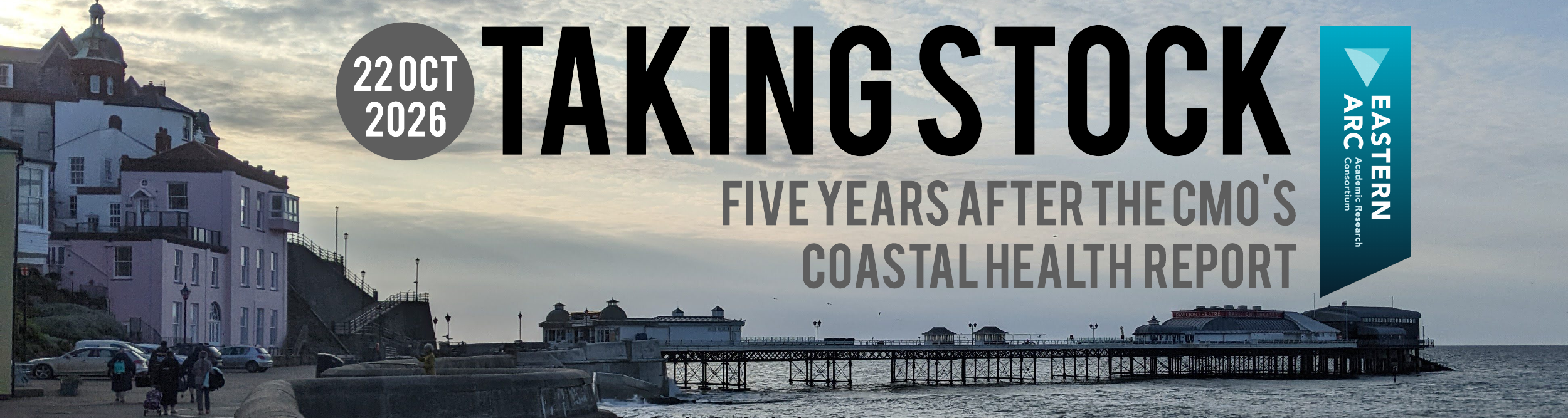
In July 2021 the Chief Medical Officer (CMO) Professor Chris Whitty published his pivotal report on health in coastal communities. In it he made clear that, ‘if we do not tackle the health problems of coastal communities vigorously and systematically there will be a long tail of preventable ill health which will get worse as current populations age.’
Five years on, have we made progress in ‘vigorously and systematically’ tackling coastal health problems on either a national or regional basis?
On 22 October 2026 the Eastern Arc Coda Network marked the fifth anniversary of the report at a one-day event in London, at which it explored what had been achieved in the interim, hearing from from those most affected by the issues the report addressed, and mapped out practical ways in which we can build on this in the next five years.
-
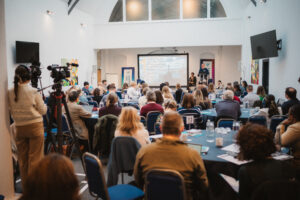 On 22 October 2026 over 90 delegates met at Mary Ward House in London to re-evaluate the Chief Medical Officer’s 2021 report on the health deficit in England’s coastal towns and communities, to take stock of the progress there has been in addressing the report’s recommendations in the subsequent five years, and to propose ways in which further progress could be made.
The delegates represented a wide range of organisations, including:
- Universities
- Local authorities – borough, county, unitary
- ICBs and NHS trusts
- CICs, charities, voluntary organisations and community groups
- Businesses
- Other organisations (Natural England, National Energy Action)
Re-evaluating the original report
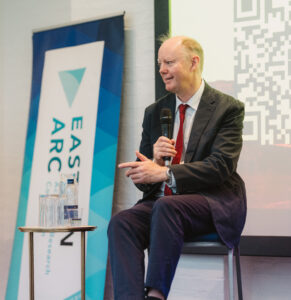 It was recognised that the original report had been published in a very different social, economic and political climate. At the tailend of the Covid pandemic, the CMO suggested that he had ‘taken a punt’ in focussing on coastal health; many had assumed that his annual report would address issues raised by the pandemic. However, he had recognised the issues of coastal health as both important and pressing: whilst his fundamental interest wasn’t in the coast per se, it was clear to him that the coast represented a long-standing epidemiological concern, and that there needed to be a concerted, collaborative effort to tackle it.
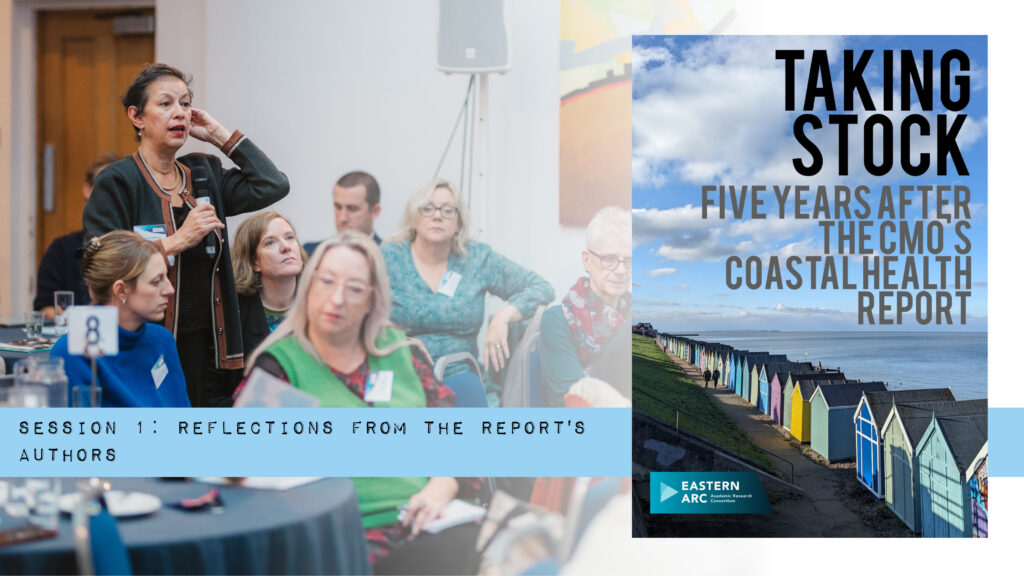
Many of those who attended the event thought that the report had been invaluable in raising wider public awareness of the issues, although some felt that there had been less purchase politically. Derek Ward and Sheena Asthana spoke about their involvement in writing Chapter 1 and 3 of the report respectively, and were pleased that it had recognised that there wasn’t a single type of coastal community, and that there was still a need for more granular data about them–a common theme throughout the day.
Progress since its publication
In addition, there had been some progress in public health, including reduction in smoking among 18-25 year olds. However, it was recognised that there was still some distance to go in decreasing the health deficit: the ageing population was increasing (with associated conditions more prevalent), and mental health amongst the young was becoming a greater issue.
Looking forward
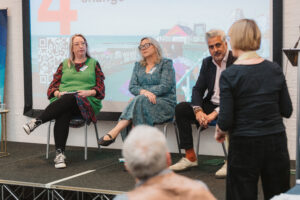 Whitty was sanguine about the time it takes to embed real political change, likening it to ‘pushing a block uphill’. It took time to bring together all the pieces of the puzzle. Those seeking change also needed to be aware of an increasingly complex ‘political kaleidoscope’, which had developed since the original report was published. Alison Hume agreed that change took time, but felt that progress was being made, and that the new PM had been receptive to the idea of appointing a minister for the coast.
Speakers and participants also discussed the opportunities and challenges of devolution, recognising that mayors would be key to positive change in coastal communities. However, there needed to be a recognition amongst researchers and public health professionals that they would not necessarily care about the coast, but rather about the needs of all those within their strategic authority (MSA).
Key points raised throughout the day
- ‘Pilotitis’: those living in coastal communities were weary of pilot projects, particularly led by external partners, where short-term funding had been provided but long-term solutions were not forthcoming. Any future interventions would need to be more sustainable developed in collaboration with those in coastal communities.
- Community-based deployment: related to this, any interventions needed be tailored to the
 specific context of the individual community, and the requirements and preferences of those within it. The example given was telemedicine, which offered great potential in terms of giving access to healthcare for those in coastal communities without access to good and reliable transport, but this should be deployed in surgeries or community centres rather than in individual homes, where take-up was likely to be poor.
- The voluntary sector: similarly, the voluntary sector needed to be centre-stage in working with communities, and should not be treated as a ‘junior partner’. Language was important in this: they should not be labelled ‘the third sector’ but rather as essential experts in understanding the specific needs and opportunities of a community.
- Granular data: throughout the day many participants returned to the need for better and more granular data if there was to be a real understanding of the specific issues of different coastal communities–as well as an identification of issues common to all.
- Influencing policy-makers: any research needed to ensure that it was ‘answering relevant
 questions’, and that there was a strong evidence base. Moreover, it was important that data was presented as impartial, and that it was in any way being used for advocacy. If policy-makers were being asked to take risks, they needed to be reassured that they were doing so from a strong, incontrovertible and unassailable position. In addition, it needed to be presented in a form that was easy to understand and digest for people with little time to read or analyse complex research, and without a background in the issues.
- Learning from global research: internationally, many countries were facing similar issues of intractable health deficits. Some had been able to address and overcome these. The UK needed to learn from these, but mainstream academic journals were often reluctant to publish the findings.
- Education was key to health: embedding health and lifestyle education at an early stage was essential for long-term, sustainable and positive outcomes. Similarly, funding strong research (particularly in regional universities based in or close to the coast, working with local stakeholders) was fundamental to identifying interventions that made a significant difference to coastal health.
Suggested next steps
 From the outset the event was framed as a chance to take stock, but also to build on the progress towards addressing its recommendations and redoubling efforts in doing so.
In support of this, it was agreed that there should be meaningful outputs from the event, which should include:
- A briefing note for Alison Hume MP and other politicians and policy-makers, bringing together but not duplicating those that already existed;
- A letter to the PM making the case for a coastal strategy and the appointment of a minister for the coast;
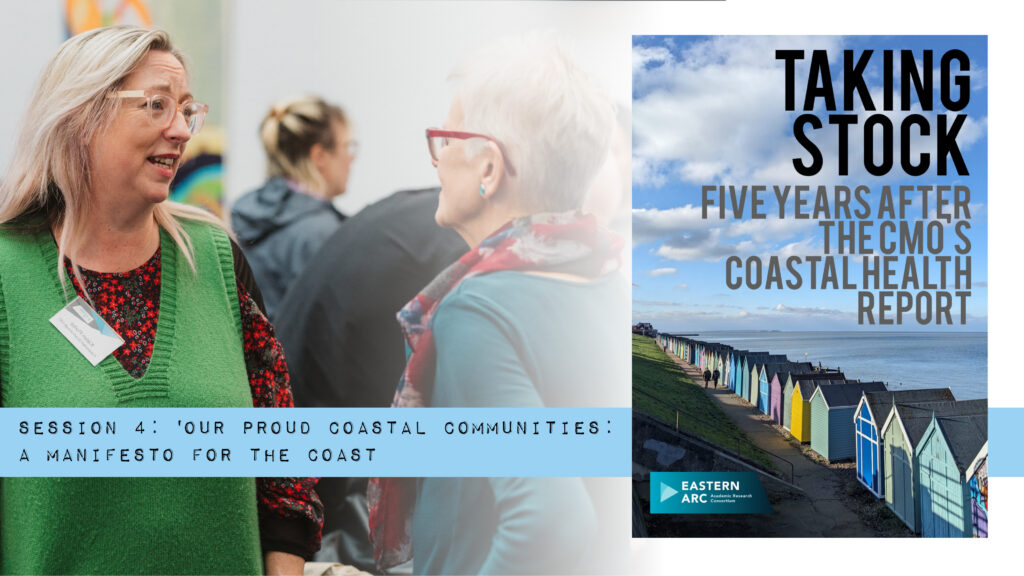
- A manifesto for future work in addressing the determinants of coastal ill-health, focussing in particular on the role of voluntary organisations, provisionally entitled ‘From Third Sector to Preferred Sector: Putting change-makers at the heart of ‘our proud coastal communities’’
-
 The delegate pack for the event included the following:
- The programme (pdf)
- The speakers biographies (pdf)
- The delegate list (pdf)
- Responses to the pre-event questions (pdf). This was intended to stimulate conversations and discussions amongst delegates on the day.
- Slides (pdf)
In addition there was a Mentimeter questionnaire after each of the sessions. Responses to these are given below.
-
Photographs of the event are available on our Flickr page by clicking on the image below (credit: Luke Fitch).

-
Recordings of three of the sessions are available below ((credit: Luke Fitch).

-
 More about the Coda Network can be found here. The site includes details of other centres and networks that also have a focus on issues of the coast.
If you have specific questions about the day, contact us at info@easternarc.ac.uk